Showing posts with label Nablus. Show all posts

Thursday, July 1, 2010

paws for this one

cats just scurry out of those big public trash disposals and scamper away and catch you by surprise for a second long fleeting moment, when you dont expect anything four legged, fuzzy or living to just pop out of those bins as you walk past them.  but theres tons of cats, no so much in Ramallah, but loads more in Nablus.  One of those Nablusi cats got pretty darn lucky, in fact luckier than most Palestinian human beings, as luck met chance and the kitty captivated an international's heart with something that the locals could not give a crap about: it's kitty cuteness.  


street kids in nablus beat cats and play with them and toy around with them or pelt stones at them to pass time, and entertain themselves.  now of course this sounds absolutely horrible to us, people not living under an occupation or in a developing country, where cats are creatures of companionship, endearment, and again cuteness. We like to hug them, and pet them and stroke them and make them a part of our family ( i don't, i can't stand cats).  We don't beat cats, we take them to animal doctors, give them medicine, buy nice food for them and heck even dress em up sometimes.  Come to think of it, cats and dogs in America are probably luckier than the majority of human beings around the world.  Anyways. That's beside the point.  The point is, in Nablus a cat's life is a life of struggle.  They live in a city where the people have lived through atrocious amounts of trauma, plagued by war for decades. 


This is actually my rommmate's story. When she was working in Nablus, she found a tiny kitty stuck in a hole in the wall, whimpering, scared out of its wits. Albeit not being a cat lover, M saved the cat.  And promptly handed the kitten over to the other internationals working at the school, and the kitty was adopted by a couple of american girls.  Peebs.  the cat even got a name, and for about a year lived inside the apartment with these americans in a little bubble of its own, saved from the dangers of the Nablusi streets and the children, reared with love and affection.  Then one day, it came time for the internationals to go back home, back to America.  What would happen to this cat? It would die if it was let loose in Nablus again, it has absolutely no survival skills to combat unloving, unaffectionate attention from the townspeople.


it was decided that the cat needed to go as well.  My roommate somehow became the one responsible to carry out this mission.  What exactly was the mission you may ask.  The Mission : To prove that this was an Israeli cat.  Not a palestinian one.  So that it could board a plane and go home..to California, USA.


Now what does this entail? here goes.  Maggie had to arrange for the cat to come to Ramallah from Nablus.  That was an amusing journey because no one had a cat carrier, but someone did have an old bird cage, so maggie put the cat in the bird cage and sneaked it through the checkpoint.  sneaked it again through the checkpoint to take it to Jerusalem.  we were kind of worried as to how the soldiers would react...to a Palestinian cat in a bird cage trying to pass a checkpoint.  Would they shoot it because it's palestinian? Would the cat not be allowed through because it's Palestinian? Would it be harassed? Held up? Detained? Arrested? Because all of those things happen to people.  But no, the soldier thought the cat was cute and let it pass without any qualms.  again, the luck of this cat surpasses the luck of the people.


Next : in Jerusalem Maggie had to prove that the cat was Israeli and that it needed a check up.  Her skillful fabrication skills linked with her incredibly friendly non threatening demeanor got the job done.  Then came another step.  Finding a cat carrier for the plane.  Maggie went to the store and I think struggled to find one, but ended up finding a bag, the only one left that was going to be Peebs'.  A camouflage bag.  


The trusted cab driver for the internationals in Nablus, along with all the locals that these internationals knew, were acquainted with and friends with, were partially amused and partially laced with outrage and jealousy.  This cat was going to America.  Most of them could not dream of that fate.  Heck, many of them can't even go to Jerusalem, a town that is 43 miles away from them. 

So the morning of Maggie's flight From Tel Aviv to the States came, and there went Peebs, peeking from a camouflage bag, hiding its true Palestinian identity to pass through Israeli security to start life anew, in America.  

 Meet Peebs: 


From Nablus: 


To Cali:


Wednesday, June 9, 2010

Ground Zero - Nablus

I didn’t know how I felt about it the first time I tried it, it was just …inteeeresting.  Hot melting cheese, subtly sweet, with a orange beaded crusted top dripping with the sweetest sugar syrup, all cut into this giant square piece of dessert that makes you feel like you ate a brick by the time you are finished.  The first time I had it was in Dearborn, Michigan. Then I ate it in this fancy restaurant in Ramallah, and it was alright, nothing great, still interesting.  And then I had it again in Ramallah, when a colleague brought it over, and I discovered that there are 2 kinds, one that is soft on top and one that is crunchy and I realized that I am definitely the crunchy fan.

And then last week I had Kenafa in Nablus. Fresh kenafa.  Like the dude had this giant circular flat pan of melting cheese over fire that he flipped over right in front of us exposing the bottom orange crusty layer and then he waited a few seconds before pouring the sugar water all over the hot kenafa.  You cant get fresher than that, watching it be made all in front of you! we all oooohed and aahed and the guy was tickled, looking at us like “get a grip on yourself, I do this about a hundred times a day”.  It was Nablusi Kenafa, where kenafa originates.  The kenafa capital of the world. It was mouth wateringly delicious, no longer interesting, but probably one of the best desserts, ever.

That Kenafa shop was our last stop that day, and we ended the long, emotionally exhausting mentally straining tour of Nablus on a sweet note. We were a group of roughly fifteen, mostly composed of Bir Zeit University students, myself and Y (my friend from UNC who just arrived to work in Ramallah for the summer, currently living with me in my apartment).  T, my other roommate, organized this tour for everyone.  Last year she worked in Nablus for 3 months.  Nablus arguably is the real deal Palestine.  Ramallah is definitely not, Ramallah is like the NYC of Palestine, a complete bubble, it’s liberal, it has a night life, and we don’t hear gun shots every night nor is there a nightly curfew because Israeli soldiers are rolling in with their tanks, getting ready to ‘monitor’ the city during the night hours. Nablus is that.  T’s experience in Nablus working on a project introduced her to phenomenal people, one of whom is a friend of hers, a guy in his early 30s who was a medic during the invasions of 2002, during the second Intifada.  He has seen more, experienced more, than your brain can fathom.  He is the one that took us on this tour, of the old city of Nablus, telling us stories about nooks and crannies of the city, stories from only several years ago. 

I had walked through Nablus a couple of times before and I remember the gloomy feeling in my heart because as beautiful as the hustle and bustle of the old city markets was, authentic in many ways than Ramallah will ever be, posters of fighters who were killed, martyrs are plastered all over the city.  Maybe if you don’t know what they are, it’s easy to ignore, but knowing that these young men were killed, who came from this city, I don’t’ know its heavy. You wonder about their age, their story, their families as you stare at them and they stare at you from these walls.

Sunday May 30th : I learned that Nablus is not just known for their delicious Kenafa.  They are also known for their soap factories.  Most of which were blown up by Israelis, leaving nothing but rubble.  We passed through one part of the city that I’ve passed through before, and Maroof (the medic) stood there telling us that that spot where we were standing, an empty field, was the site of one of the bigger soap factories.  The Israeli soldiers had tied up and blindfolded Palestinian young boys inside the factory, and then dropped a F-16 bomb on it as the boys were inside alive still.  The end result was flesh, blood and a destroyed factory.

When I say that the city is being destroyed, I don’t know how to exaggerate that enough or to convey that it is not an understatement.  Nablus used to boast 42 soap factories, now there are 2 left in the city. The city was in lockdown for nearly 10 years, meaning that no goods were allowed in and nothing was allowed out.  The checkpoints were closed, which means nothing is going in.  how do you live like that? I don’t know.  In America our constant supply of goods and services is something that we take for granted soo much that I don’t think we can imagine what this means when a city is in lockdown for almost a decade, none of us know how to imagine that even.

Invasion of 2002: walking around the city, when actually pointed to look, really look at the walls, I saw perforations, hundreds and hundreds of them, the walls are covered literally with bullet holes.  I don’t know how to convey what it feels like to be physically be in standing ground, to stand where this much violence took place, because you wonder about the people, the human beings that were shooting these bullets and the people that it was aimed at, because bullets have no other purpose than to kill.  We walked under an arch, and M the medic stopped us to tell us that that spot was where 150 dead bodies were lain, all shot dead.  As a medic, they were not allowed to dispose of the bodies.  The Israeli soldiers wanted the dead decomposing bodies to just stay there in the street because they would do their rounds and come back around to do a head count of who they killed and shoot them again in the head to make sure that they were dead.  Mcandidly told us that it took 3 days straight to wash all the blood off the street.

We stopped abruptly at a random spot.   M and his best friend J stopped to tell us about a secret path that they used to take when they had to carry a wounded person back to this small room where they would apply gauzes and bandages and do basic medical things.  They described one instance when they heard gunshots and saw a boy shot on the ground and as they were going to pick him, the soldiers kept on shooting at them instead.  Jihad at that time being only 17, froze in place and couldn’t move out of fear.  Maroof had to go back to get him and together they carried the body through this secret passageway.  They took us through this narrow path, that weaved in thorough a building and out into the main street of the old city.  Even in broad daylight and sunlight, it was dark and we had to crouch and watch our steps on the uneven stairs and steps and walk forward.  I don’t know how they did this at 2 or 3am in pitch black darkness in the dead of the night.

M continued to tell us about their ‘hospital’ room which was basically a makeshift room with basic supplies.  He told us that it was basic medicine that they used to have, and they used to go door to door to see families.  Several times as they were inside soldiers would come inside to demolish everything in the room, leaving htem with no supplies again, until they were able to somehow gather more.

Then they took us to what used to be a very nice museum, boasting the roman history of Nablus.  The place was absolutely destroyed.  I kept on thinking of what could have been.  In a perfect world, if the city was intact, its hard to imagine why tourists from around the world wouldn’t flock to its beauty, history and its gifts (like the best kenafa in the world).  Nablus is one of the world’s oldest cities, having existed continuously for 4 thousand years (THE oldest city in the world is also in Palestine, a city called Jericho).  
It’s the largest city in the west bank.

The city, with its stone walls, arches, reminiscent of roman architecture, narrow cobblestone passageways, situated by mountains on all sides, houses and buildings sitting on the curves of those mountains, I realized is standing currently on a foundation of resistance against annihilation.  Getting off the mini van (the public “buses” here are small orange mini vans called a “service” (pronounced serveeeeese) which usually drops you off at the center of town, what will take your breath away is the view.  High mountains covered with replicas of white stone buildings. I always take a moment to appreciate it, because it truly is a sight.  It’s a conservative town.  There are 2 or 3 restaurants where women are allowed in.  most places are hangouts for men only.  There are a lot more women covering their hair then you see in Ramallah.

Passing through demolished homes, factories, museums in scattered parts of the city I couldn’t escape the thought and the feeling.  It was a familiar feeling in an odd way.  The kind of heaviness that was taking a foothold in my heart was the same feeling I had felt when I had seen Ground Zero for the first time.  The destruction site of 9/11 was somehow this devastating feeling that Americans and people around the world sympathized with.  However, walking around in Nablus, it feels like since the occupation, countless ground zeros here are ignored. But more than ignored, they are tarnished, the deaths are displayed to the world as barbaric terrorists being killed for someone elses ‘security’and their families are never shown, their stories are never told.  I don’t know how Americans would feel if someone shoved it in their throats that all the people that died in the twin towers deserved to die.  Feels awful doesn’t it? that’s how the rest of the world sees Palestinian deaths to many degrees. 

Before leaving Nablus, I saw an especially enlarged poster of a martyr.  T told me that it’s his house under the poster.  I saw a woman and a kid, and T told me that it’s his widowed wife and his son.  That was the hitting point for me, and I couldn’t shake it off.  I couldn’t believe, this young boys’ face that is plastered all over Nablus, that that was his wife and son that I was looking at. 

I hope no one thinks that I personally condone suicide bombing.  I think it is a ludicrously ineffective violent act that is a huge tragedy.  However, people should know the cities that people who are forced to take this action are from and what their stories are.  If America wages wars left and right after one ground zero..  imagine years and years of never knowing liberation and being surrounded by ‘ground zeros’. 


more about Nablus during the invasion : http://www.redress.btinternet.co.uk/rgiacaman4.htm

Tuesday, June 1, 2010

blog post about blogging : an extended disclaimer

Apologies for the irregularity in the posts. I know I have no reason to apologize but at the same time there are a few friends who look forward to reading regular posts.  Also apologies for the hassle of making this completely a private invited only blog, reason being when I saw that someone from tel aviv, Israel was reading my blog for an extensive period of time, I’m not gonna lie, I got paranoid.

I’ve entertained the thought of blogging about little stories here and there, snippets of life I suppose, like I have been doing and writing about the more serious, detailed stuff, that I don’t feel comfortable blogging about in emails to friends.  Truth of the matter is sometimes its hard to squeeze any words out under a constant mental pressure, which is why I’ve actually found myself avoiding even this venue, the blog, to stay connected. Sometimes I’m at a complete loss of what to even say because my brain has gone through rounds of rapid fire thoughts about a plethora of different issues simultaneously. 

A brief and concise update about my personal life: teaching/school ends in one week, I might be (inshAllah) going to Damascus to dedicate the summer to some intensive Arabic learning, I have a new roommate who is phenomenal (a lovely girl from Florida, who is a new Muslim convert) and my friend from UNC, a Palestinian American, who just arrived about three days ago (both of these individuals have given me so much to think about and so much to reflect on, that it has quite literally put a very interesting spin and twist on my perception of Palestine).  I spent an intense day in Nablus this past Sunday on a tour of the old city with a young man, a medic, during the invasion of 2002 that left me appalled, angry, and awed at what I didn’t know, what the world doesn’t know, and how much just goes on untold about the extent of evil that can be committed by people.

More to come on all of this soon.  inshAllah. 

Tuesday, May 18, 2010

Safwan


I met him upstairs beaming with a giant smile and embracing me as his friend 2 seconds after finding out what my name was.  The upstairs, a big open space with a two giant doors leading to a small balcony overlooking the garden had a single mattress on the floor,  and Safwan was peeking out a little bit anticipating to see M upon hearing her voice.  I had heard so much about this little 6 year old boy and I was eager to meet him.  He dragged his little body across the room and let himself be scooped by my M into her arms. 

I was eager to meet this boy for many reasons.  One of the main ones being that he was the reason my roommate is in Palestine and will continue to be here.  The second because I heard his story.  Born with Spinal Bifada, paralyzed from the waist down, he was abandoned by his parents, left to die in the hospital.  His disability, half a paralyzed body, a large head, was too much to bear for the then 15 year old mother, and both parents abandoned the newborn.  A group of Catholic nuns (from Mother Teresa’s Missionaries of Charities group) took him in.  And raised him since.

I was astonished to hear his English, fluent and perfect, without a trace of any struggle to express any thoughts or emotion that second language learners often face.  He grew up bilingual at the Sister’s house hearing them speak a communal English (the sisters are all stationed here coming from various countries, with English being their binding language, which turns into a mixture of old English meets formal English meets colonial english) and Safwan picked up their lingo along with his native knowledge of Arabic.

I was astonished by his warmth.  That afternoon, was my first time in a convent, and in an orphanage.  And this place was an orphanage inside of a convent.  The top floor was for outcasted children, who were left to perish before they were taken in by these Sisters. The other kids that I saw were barely moving.  One sat up on the floor staring off into the distance.  The other was sitting in her wheelchair, completely non functional.  Clapping in front them sort of elicited a response but for the most part they were severely disabled, not stimulated by anything at all, they needed to be changed and fed and they lived.  This was also my first exposure to disabled children.  I would be lying if I said I wasn’t nervous and uncomfortable.  Playing with safwan for half an hour made me completely forget that he was a paralyzed child and that half of his body didn’t work.  He was just this vivacious kid excited to watch movies on maggie’s laptop and play catch throwing around a giant ball across the room.
The bottom floor was for women who otherwise have no place in society, some battered so severely that they have lost all mental capabilities, others who are senile due to abuse or age.

I remember thinking how can someone abandon their child? how sad it must be to grow up in an orphanage.  I was corrected on this issue by Maggie saying “thank god Safwan was abandoned! He grew up with 5 mothers! (the sisters) who knows what his parents would have done to him if they had actually taken him, he’d probably have been left to die, or locked up somewhere because they were so ashamed of his existence.  Safwan had two other siblings.  One of whom was fed a bottle of bleach and had to be rushed to the hospital.  The kid miraculously survived.
Once in a while safwan’s dad visits to take safwan around town to beg for money and then after collecting the money for himself, he returns safwan to the Sisters.  Sounds like a movie doesn’t it?

A couple of weeks after I met safwan, he came to Ramallah for 2 weeks for some necessary medical procedures.  During that time, M had created a rotating schedule of friends who would go spend time with safwan at the hospital for several hours during the day and then Maggie would spend her nights at the hospital with him.  I’d play with safwan, and watch him wheeeeeeeeee through the hallway on his wheelchair, talking to every single person on that floor.  Running after him I met some of the most interesting characters, and at that point in time, those were my first interactions with Palestinian Palestinians.  I met a man suffering from bullet wounds from Jenin, and his entire extended family who would sit me down in their room for hours to ask me a variety of questions and then feed me sweets and ask about safwan.  I guess that’s when I really bonded with safwan, spending time with him in the hospital, helping with his homework, or just fooling around with the camera.

You would think occasions like Mother’s day would be a sad day for little safwan, since he is fully aware about what his parents did and how they feel about him, but it actually ends up pretty humorous.  He gets confused why he makes only one mother’s day card, because if there is only one, who amongst the five Sisters, who have all been mothers to him, is supposed to get that one card?

As bright and lovable as safwan is, the truth of the matter is that he has absolutely no future in Palestine.  Disabilities won’t get you far. To have a future of any kind ,he needs to get out.  Knowing this, Maggie’s been on the hunt for a family that would be willing to adopt him.  you’d think that that would be the problem.  But no, there is already a family lined up from Spain who is waiting for Safwan, knowing his background and his life story.  However the problem comes in with his biological parents.  And the community who stirred up this controversy that the Sisters are just simply trying to convert this little boy and that sending him away to Spain would only complete their mission. 

And that “legally” adoption is not a possibility because the State law (what state?) and “Islam” (the same Islam where the Prophet (pbuh) himself was an orphan?) forbids it. 

???? I was so perplexed hearing this.  Where did this come from?? That adoption is illegal in islam? After doing much research and literally obsessing over this and many other issues of Islamic jurisprudence, I still have no answer to why people would intervene in the life of a disabled boy to stop him from having a better life with the dogma of religion.  Somehow handing the boy over to a Christian family would be injustice to islam (according to the townspeople) but ..sending him back to the father (which is something they suddenly decided to instigate and provoke, by literally buying the father off) who has no problem abandoning his child or attempting to kill them would be preserving islam?

Not having Muslim friends around  anymore or not having anyone of the same faith to immerse into Islamic conversation with  (in real life, not virtual cyberspace), situations like this heightens a sense of urgency to figure out how political, social and cultural elements of society can use religion to come up with ridiculous jurisdictions and cover it up in the name of a blanket term “islam”.  Especially when the conversation is happening with a non muslim, and even though I am not directly held accountable, I am still somehow on this other side that “forbids” something so noble.   It sends me on desperate hunt to dig and search for the truth, whatever that may be, hidden under so many many things.

Often times I make sense of things by telling myself that it’s not Islam with the flaws, its Muslims, and the lack of unity and a deeper understanding of faith and the spirit of Islam that gives birth to so much of the complexities within the community.  Of course this issue is not exclusive to islam and muslims, it exists in all groups. The freedom of will to interpretation comes with the burden of too many types of interpretations leaving a dangerous space for manipulation and blind stupidity.  i wish instead of muslims constantly defending islam to outsiders by having a selective scattered cliffnote collection of Quranic verses and hadiths, they’d look inwards to become active and progressive agents of unity and change within the internal community.  Instead of wasting so much time digging up and arguing about the past, I wish people would struggle more with figuring out answers for the present and the future by admitting when and where they are or were wrong. I wish humanity would come before dogma.   


*This adoption question led me on a quest to ask anyone and everyone I know about this, including professors, friends and family members.  I found out speaking with my mother, that nowhere in Islam does it say that adoption is "illegal".  In fact she herself has 2 cousins who have adopted children in Bangladesh, and though its a complicated issue, it certainly is not a forbidden one.                                                                                                                          

Sunday, May 2, 2010

"the good samaritan"

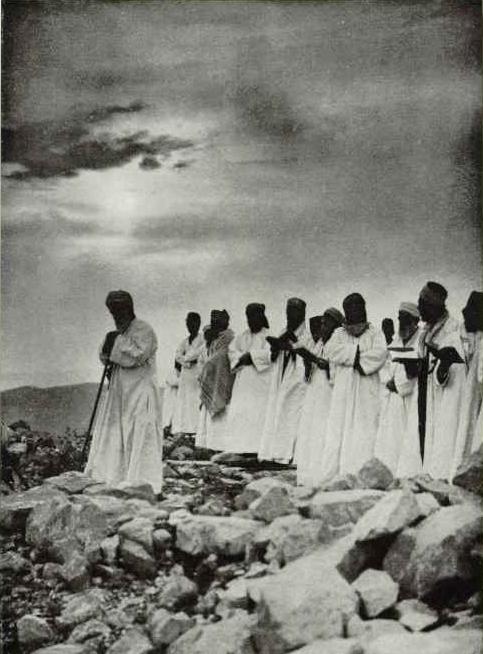
I always knew that the phrase “being a good Samaritan” was something that meant being kind in some way, being a good neighbor/ compadre so to speak.  But did you know that they, the Samaritans,  are an actual group of people who live on top of a hill in the city of Nablus in Palestine? And that there’s only 700 of them left in the world? Some of them live on this hill and some live in a place called Holon, outside Tel Aviv, Israel ( and these are the only 2 spots on earth where they can be found) But they all, all 700 of them, gather together once a year for Passover on top of that mountain, Mount Gerizim, to commemorate a super ancient tradition of Passover, from the days of Prophet Moses, the traditions of which, according to the Samaritans, have been  kept holy and unchanged for 3600 years.

Judaic Passover commemorates ancient Israelites being freed from slavery from the ancient Egyptian pharoahs, and it’s a time when people reflect on the struggles of the ancient Jews. Most images of Passover conjure up quiet time of reflection and.. flatbread.  The Samaritan Passover is quite different.  And quite bloody.


A couple of weeks ago, M, the French teacher Marie, and I  took off to Nablus right after school to go see the Samaritan Passover, a special invitation that I couldn’t really pass up.  It was quite an event and I was shocked to see more photographers and journalists and spectators from around the world attending this event than the actual Samaritans! They didn’t seem to mind, this was not a quiet secretive affair, in fact it was very much the opposite.  We got there around 3:30 pm  and the actual festiviites did not start until the sun set on the sunny clear sky.  Children wore all white, and older men in the community walked around with long robes and a special hat.  Walking inside a gated area, we saw giant pits blazing with fire, and the children adding in logs to light up the pits more, in preparation for the meat festivities that were to come later on.  Straight in front of me was a comical sight, I thought, because there was a set of bleachers set up similar to those that you’d see in a kid’s mini league baseball game.  Except for this one, on either sides, stood armed Israeli soldiers with the Israeli flags flying over them.  The crowds got bigger and bigger, and more and more robed men entered through the gates, and after a while they all took their seats and chanted for a good while.  The highest priest of the community was pretty easy to pick out.  He was an old,  large man that came in with a bright vivacious silky green robe, with a suited man walking in front of him holding the bottom of the priest’s robe up from the gound so that it doesn’t get in the way of the priest walking.  His age and his clothes said it all.  Photographers snapped away and pretty soon we were relocated to a special area, the non Samaritan spectator area, which after an hour got packed like a can of sardines with barely any spot to move. 


Truth be told, I had no idea what I was witnessing.  It was a lot of standing, lot of waiting, lot of being crushed and tiered restless feet, wondering when the stupid sun would set.  Photographers were literally climbing on top of us to get some good shots of Samaritan spiritual leaders sitting in the center area waiting for the feast to begin.  An hour or so before the sun set, a herd of sheep were brought in.

Fastforward 3 hours.  Pure madness and chaos.  The sheep were all slaughtered, herds of people were standing on rooftops, trying to get a glimpse of the Samaritan leaders singing and chanting and praying, and seeing the fresh bloody sheep, being placed on a series of large hooks, hung for everyone to see.  The Samaritans all had a smear of the fresh sheep blood on their foreheads and they went about carrying huge wooden stakes to hang the sheep which would be prepared and cooked in those giant pits and not eaten till midnight. 


The Samaritans reject the Jewish, Christian and Islamic focus on Jerusalem, and instead believe that Mount Gerizim as God’s chosen site.  They boast a continuous lineage from Prophet Moses’ brother and have a complete record of the high priests of their community that stretch across over 130 generations*.

I am continually surprised at the permitted and prohibited lines drawn in and around Palestinian communities by Israeli authority, restricting movement, and perpetually squeezing them into tight spaces.  Though this Mountain is on top of Nablus, there is a checkpoint outside of the Samaritan community that does not allow Palestinians to pass through.   


Friday, March 19, 2010

Friday prayer, Tear gas and Rocks

Friday morning I woke up unsure of the day's plan, still distraught from the week, still uncertain about how to perceive what's going on around me.  It was a mental tug of war trying to decide if I should go to Jerusalem, the epicenter of where things have been really going wrong, with my roommate for the day or not.  I finally decided to go for it, because the alternative would have been to just sit in my room to brew over things, ask and ask questions that had no answers.

My roommate, another friend from Nablus and I caught the 9 o'clock bus  from the Ramallah bus station to head towards Jerusalem.  The checkpoints supposedly earlier in the morning are not 'that bad' and as an international we had an alternative option of taking an alternative bus that goes around the checkpoint and not actually through  it.  This privilege is given to those with Israeli ID's and to those with international passports.

Qalandia checkpoint was eerily quiet in the morning, however, the remnants of the week long clashes were more than visible.  Mounds of displaced dirt, evident of where the soldiers had chased down protesters, soot on the streets, evident of fires, and burning tires from earlier in the week.

This was my first time in the Old City of Jerusalem.  Gated on all sides by ancient high walls, like a monstrous fort in the middle of a spacious western bustling city, the old city is like an intense mixture of the world's oldest structures, most sacred sites, meeting at the same spot.  The proximity of things, how incredibly close together  everything actually was, was something that I was completely unaware of and not only baffled by but completely perplexed by.   I felt frozen.  Standing in one spot, in front of me was the Dome of the Rock, the oldest Islamic building in the world, right in front of it was Al-Aqsa Mosque, the third holiest site in Islam, and in between was the Wailing Wall, the holiest of sites for Jews, and behind me was the Church of the Holy Sepulchre, a spot venerated by Christians as the spot where Jesus Christ was crucified.

How about all that for a nice Friday morning?  I couldn't take enough deep breaths to take it all in.

Around 11:30 we walked around the winding streets, covered with shops, weaving in and out of the Muslim, Jewish and the Armenian Quarter (all of which are so close they might as well be rooms in a big house) and the crowd kept on getting bigger and bigger.  Why? Like I said this was the epicenter of where things are really going wrong.  Last Friday, Israeli soldiers had prohibited Muslim men under the age of 50 to even enter the Old City, let alone pray the Jumaa prayer at the Al-Aqsa Mosque, and this week they had done the same thing. The city streets were littered with soldiers.  As prayer time crept up, so did the tension.  Standing on the entrance to the Al-Aqsa Mosque, we saw the soldiers blocking and monitoring who is going in, turning away those who were under 50, and arguing over who actually looked 50 or not.

Outside of the old city, soldiers with masks, grenades, guns, tear gas stood around hundreds of Muslim men who stood on the streets to make their call to prayer.  They pulled out their prayer rugs (laying them out horizontally so that more than one could pray on one), or grabbed  pieces of cardboard from the shops and bazaars behind them to serve as prayer rugs for their obligatory weekly prayer, as soldiers stood firmly with their M16 rifles watching them intently.  Photographers and journalists hovered around snapping away pictures from different angles of this event.  You probably won't see this on any American mainstream news.  The Israeli soldiers were also filming internationals who were watching, because they have a tendency to record those who shouldn't be seeing the 'wrong' things, they film internationals who attend protests so that at immigration they can be turned away.

It was heartbreaking to stand there and watch.  I kept on wondering what went through the soldiers' minds, what were they thinking, what were they defending, and if any part of them felt a glitch in their hearts for standing in the way of those who wanted to pray at their place of worship with guns and tear gas.

I made my way home a couple of hours after that, after walking around the city for a bit more.  When I got to the Arab Bus Station to catch my bus number 18 to get back to Ramallah, the bus driver told me that he would only drive to the border.  Normally, that bus goes straight through and drops everyone off at the center of town in Ramallah.  I was too tiered from the day but aware enough to realize ok that must mean that Qalandia has been closed off, and there's probably problems at the checkpoint.  About half an hour of driving, and seeing some protests on the way (protests about the new settlements that are being built), the bus stopped in front of Qalandia and everyone walked across the checkpoint, and on the other side I found a bus driver who asked me if I was trying to get to Ramallah.  Once inside, a friendly man told me that yes I was on the right bus and this one would drop me  off where I needed to go.

Again Qalandia was eerily quiet.  However, as soon as it started driving off, I could see a crowd of men slowly emerging closer.  it was funny because it was the typical, stereotypical scene that I've seen in news clips, young men with Keffiyahs wrapped all around their faces.

Suddenly there was a loud "POP! POP! POP!" and white smoke, I realized that it was a soldier shooting tear gas at the Palestinian boys and then a loud CLANK that made me jump out of my seat.  It was a rock that was hurled at the bus.

I couldn't have been happier to walk back home when the bus dropped me off.  It felt good to walk the same street that I took to and from school every day and turn the corner to walk in to the apartment thats been mine for the last two and a half months, it felt really nice after an emotionally draining day to feel like I got home safe and sound.

...with more questions on my mind, then I had woken up with in the morning.

http://www.youtube.com/watch?v=Ag1mArePD-M